

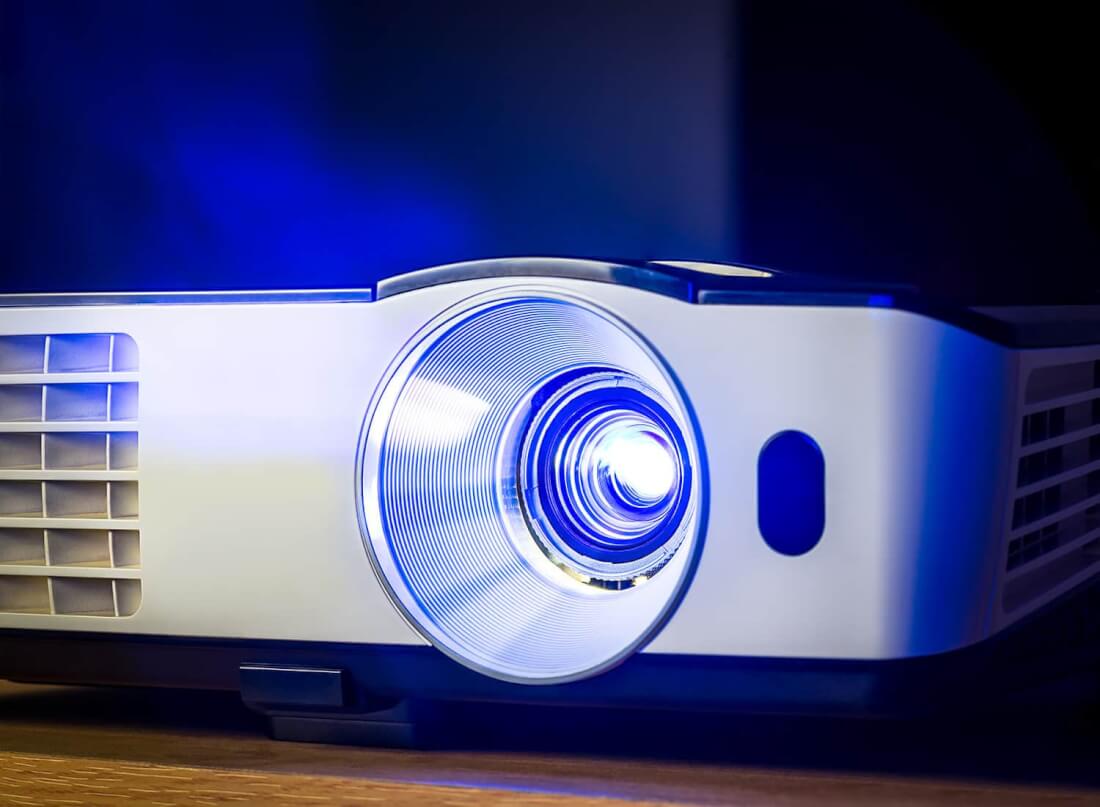
If you are in the market to buy a portable projector, then this article was written with you in mind. Specifically, we are going to talk about why it is important to purchase a portable projector, what to look for in one, and most importantly – how to find the best portable projector for business. After reading this article, you will be more familiar with the different kinds of portable projectors, and what to look for when buying one.
We hope that by the time you have finished reading this, you will know how to identify the best portable projector for business use. So, let’s get started.
Why buy a portable projector? One of the main reasons to buy a portable projector for business use is the fact that it provides excellent picture quality. In fact, according to some studies, projection viewing is better than watching television, and the picture quality is even better than viewing DVD’s and viewing a cinema. To some, this seems too good to be true.
The good thing is that it is quite true. The LG Electronics Ph550 Minibeam projector can project an image at up to a 60 foot. It does have a higher maximum resolution (which will obviously reduce the clarity slightly, but it still outperforms the RGC PCB/P3 and CED mini plasma projectors). For a business user, who expects great picture quality and crisp, clear images, then this is all that you would need.
One of the best portable projectors for business uses is the Anchor Graphics Proline. This particular model from Anchor Graphics has a resolution of 10 inches. This is considerably better than the others, such as the Samsung and ViewSonic models. If you are still wondering what this means, then consider this: the highest resolution for a portable business projector is six inches.
The next portable projector that we are going to discuss today uses a very unique technology, which is known as tripod mount. When mounted on a tripod, the motion of the projector is smooth and constant. This is very important because it eliminates the phenomenon of screen shakes. The tripod mount also makes it possible for you to adjust the position of the screen from any angle, which allows the projector to be used for viewing multiple monitors at the same time. And last but not least, the tripod mount makes it possible to increase the size of the display very easily.
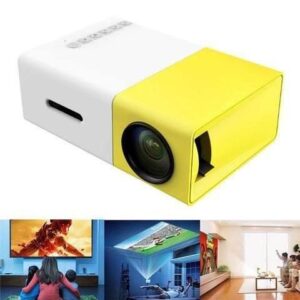
A few months ago, we had a question from one of our readers regarding whether a portable projector for business use could include a Bluetooth speaker. We are glad you asked, because now there are some portable projectors on the market that include a Bluetooth speaker built right into the projector itself. There are also some projectors that provide two outputs, one with a standard audio output and another, which have a microphone attached.
In order to make it easier to understand, if you connect your Bluetooth speaker to the projector via the USB port, then the microphone is always attached to your computer. This is an important consideration when working with larger groups or if you want to show presentations to a room full of people.
In terms of video resolution, a good projector should have a 1920 x 1080 resolution, which is about six times better than what the average Blu-Ray disc provides. Of course, there are certain factors that need to be taken into consideration when choosing a video resolution, such as the quality of the pixels, and the amount of lighting that is on screen. There is also a different format available which is referred to as “stereo”, which utilize a vertical frequency for one channel (red), and a horizontal frequency for the other channel (green). These can be helpful in correcting for screen lighting issues.
The last thing to consider when comparing portable HDTVs is picture quality. For a given device, the picture quality will be affected by the source signal and quality of the connection, as well as any external factors, like ambient room light. If your projector is connected to a high definition TV, then the differences between the standard definition and the high definition could be greater than twenty-five percent, and depending on the number of pixels per frame, the difference could be even greater. Find out more on 10beest.