
Step by step instructions to Create Good Personalities for Your Characters

ByKanu
Nov 25, 2020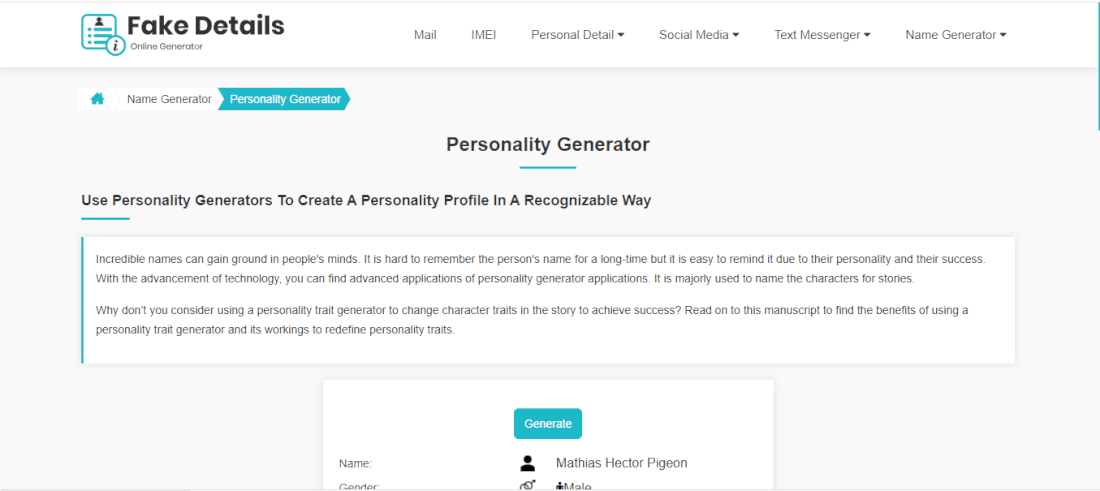
Most stories need solid characters to push the activity ahead and attract the peruser. In any case, making solid and relatable characters can be a battle. In case you’re attempting to construct a character with an exceptional character, start by searching for a motivation in genuine individuals and different characters you appreciate. When you have a thought of what you’re going for, set aside some effort to characterize the characteristics that make your character remarkable. At long last, make a solid foundation for your character and decide their part in the story.
1.)Discovering Inspiration for Your Characters
1.Look for motivation in genuine individuals. Giving your character attributes drawn from the characters of genuine individuals is an incredible method to cause them to feel relatable and practical. Consider individuals you’ve realized whose characters established a connection with you. What was it about their character that stayed with you? In the event that you needed to characterize their character in only a couple of words or sentences, what might you say?
You may be enlivened by companions, relatives, educators, and coaches, well-known individuals, or even individuals you’ve just met in passing.
Record a couple of the individual’s key character attributes. Is it accurate to say that they are bashful or active? It is safe to say that they are bubbly and enlivened, or more held when they talk? What are their inclinations and leisure activities? What kinds of things do they need or put stock in?
Utilizing genuine individuals for motivation isn’t equivalent to putting together a character legitimately with respect to a genuine individual. Simply get characteristics that you find intriguing, similar to your closest companion’s warped grin or your sibling’s trepidation of flying.
- Evaluate what makes your #1 characters incredible. Do a nearby examination of a couple of your #1 anecdotal characters, and attempt to characterize what it is about them that makes them so engaging you. Record a concise portrayal of the’s character, and afterward make a rundown of the things that cause the character to feel especially convincing, reasonable, or relatable to you.
For instance, possibly you are captivated by their multifaceted nature, or perhaps you end up identifying with their blemishes and uncertainties. Maybe you make the most of their sensible discourse designs or the little subtleties of their commonplace collaborations with different characters.
Keep in mind, you don’t need to like the character as an individual to like them as a character! Extraordinary miscreants and screw-ups can be absolutely disgusting, yet intriguing whenever given enough unpredictability.
- Acclimate yourself with character prime examples. A model is an image or a common illustration of something that is immediately unmistakable to a great many people. Character prime examples can make extraordinary beginning stages or establishments for building completely fleshed-out characters. Consider which model accommodates your character best, and consider how you can work inside and around the “rules” of the paradigm to make your character special.
Instances of models incorporate the saint, the reprobate, the hero, the pioneer, the nitwit, the femme fatale, or the savvy lady.
A few types have their own models. For instance, in secondary school settings, you’re probably going to experience paradigms like the muscle head, the geek, the team promoter, and the prep.
Consider how your character fits the shape of the paradigm, yet in addition consider ways that they probably won’t fit. For instance, possibly your character is a team promoter, but at the same time, she’s an individual from a Dungeons and Dragons club at her school. This is a decent method to try not to swear by banalities and generalizations.
- Use character appraisal instruments to help characterize your characters. Character tests like the Myers-Briggs Type Indicator (MBTI) evaluation can be an extraordinary method to nail your’s characters down and assist you with understanding their practices and inspirations better. In the event that you as of now have an overall thought of who your character is, take a stab at stepping through one of these exams “as” the character to increase some more profound experiences into what is most important to them.
You can discover free forms of the MBTI and other character tests on sites like Personality generator, Truity, and Humanmetrics.
Most character tests offer a progression of explanations.
Character tests like the MBTI order characters into a set number of “types.” For instance, if your character is a solid chief, they might be an ENTJ (Extroverted, Intuitive, Thinking, Judging) type.
2.)Characterizing Your Character’s Primary Traits
Decide your character’s significant objectives and inspirations. Your character’s emotions, convictions, and activities won’t bode well except if you have a decent feeling of their basic longings, necessities, and objectives. Distinguish what objectives your character is attempting to accomplish and think concerning why (and how) they wish to accomplish them.
These objectives and inspirations can be either enormous or little in scale. For instance, in an individual scene, perhaps your’s character will likely sneak out of a gathering unnoticed. Her inspiration may be that she’s inclination overpowered and needs to be distant from everyone else.
For a bigger scope, perhaps your’s character will probably win the state spelling honey bee. Her fundamental inspiration could be to pick up the endorsement of her number one instructor or to appear as one of her opponents in school.
Recollect that what your character needs isn’t generally equivalent to what they need. For instance, maybe your character needs to be a renowned famous actor, yet what he actually needs is to be adored for what his identity is.
Characterize your character’s feelings of dread and instabilities. Your character’s fundamental feelings of trepidation are similarly as significant as their cravings and inspirations. Consider what your character is attempting to maintain a strategic distance from, and why. How do their apprehensions influence their decisions and responses to the circumstances where they get themselves?
For instance, perhaps your character fears dismissal. He may try not to tell his affection interest how he truly feels due to this dread.
Give your character advantages and interests. Your character will feel all the more genuine in the event that they have very much characterized diversions, interests, convictions, and sentiments. Consider what your character may appreciate doing in their extra time, what sorts of books or films they would appreciate, or how they would feel about a specific disputable issue.
Your character’s advantages and feelings don’t need to line up with your own—indeed, your character will eventually be more extravagant and additionally fascinating on the off chance that they vary from you in different manners.
Examination your character’s advantages, interests, and assessments so you can depict them all things considered. For instance, if your character appreciates beekeeping, found out about what’s included.
Let your character have imperfections. No one is amazing, in actuality, so your character won’t feel genuine except if they have a couple of blemishes and flaws. Your character may have one significant defect or a few more modest ones. Consider how these defects may shape their activities and decisions.
For instance, perhaps your character is continually stumbling into difficulty since they struggle saying no when their companions approach them for favors—regardless of how crazy the solicitation.
Evade imperfections that simply cause your character to appear to be considerably more ideal (for instance, making your character “excessively kind” or “excessively lovely”).
On the opposite side of the coin, lowlifes and “terrible” characters can feel all the more fascinating and sensible in the event that you give them a saving grace to a great extent!
Give your character exceptional characteristics, propensities, and idiosyncrasies. Your’s character may outgrow their opinion and feel within, but on the other hand, it’s essential to consider how it shows up from an external perspective. Consider what might make your character stand apart from individuals noticing them. This could be anything from their appearance to the manner in which they sound when they talk.
For instance, possibly your character has an expression (like “Gosh!” or “You don’t say.”), or maybe they have a propensity for apprehensively tinkering with their sleeves when they talk.
Your’s character may be communicated outwardly through things like how they dress or style their hair.
3.) Putting Your Characters in Context
Make a backstory for your character. A character’s past may influence their sentiments, wants, fears, decisions, and activities. Guide out a couple of key occasions in your character’s life, and consider the manner in which these occasions may have formed what their identity is and how they carry on.
For instance, if your character was once in an awful auto crash, they might fear driving or being in vehicles. Possibly they should go up against this dread sooner or later to push the story ahead.
Build up your character’s social setting. Where your character comes from can likewise affect their convictions, objectives, and inspirations. Consider the sorts of changes, difficulties, and prevalent burdens your character may encounter dependent on when and where they grew up.
Perhaps your character is a young lady in 1950s modest community America, for example. She may feel some strain between the prevalent difficulty to get hitched and start a family, and her very own longing to go out and accomplish something significant (like turning into a specialist).
Characterize their associations with different characters. In many stories, characters don’t act in confinement. They connect with different characters—as adoration interests, rivals, contenders, partners, companions, adversaries, or once in a while a mix of those things! Consider how your’s character may influence the manner in which they respond to people around them.
For instance, if your character is solid-willed and serious, they may conflict with different characters who share those qualities—regardless of whether they are in fact on the equivalent “side.”
A timid character may feel threatened by a character with a more intense character. One of their objectives in the story may be to defeat their dread